The Carolina Theatre opened on Halloween night in 1927. Boo!
The Carolina Theatre was the largest theatre in the state when it opened.
The Carolina Theatre was one of the most expensive buildings erected in North Carolina in the 1920s, costing over half a million dollars. With inflation today, that’s $7 million.
The Carolina Theatre in Greensboro was the second commercial building to be air conditioned in the state.
The Carolina Theatre originally had 2,200 seats. With the balcony now closed, the orchestra and mezzanine levels offer a total of 1,075 seats.
The Carolina Theatre was originally billed as “The Showplace of The Carolinas.”
The first movie with sound—or “talkie”—shown at the Carolina was “Glorious Betsy” starring Conrad Nagle in 1928.
The second talkie shown at The Carolina Theatre was “The Jazz Singer.”
Originally, the ceiling of the Carolina Theatre’s lobby was painted to resemble a blue and pink twilight sky.
Mayor Paul Lindley was issued the first ticket to the Carolina Theatre on opening night.
In 1927 a matinee cost 50 cents, an evening show cost 75 cents and children’s tickets cost 15 cents. Accounting for inflation, 75 cents in 1927 is about $10 today.
The Carolina was the first theatre in the state to install a motion picture sound system.
In 1928, the Carolina Theatre installed Vitaphone speakers, a record and disk principle system, to be used for “talkies.”
The Carolina Theatre was designed by Engineer James M. Workman and architect J. H. DeSibour.
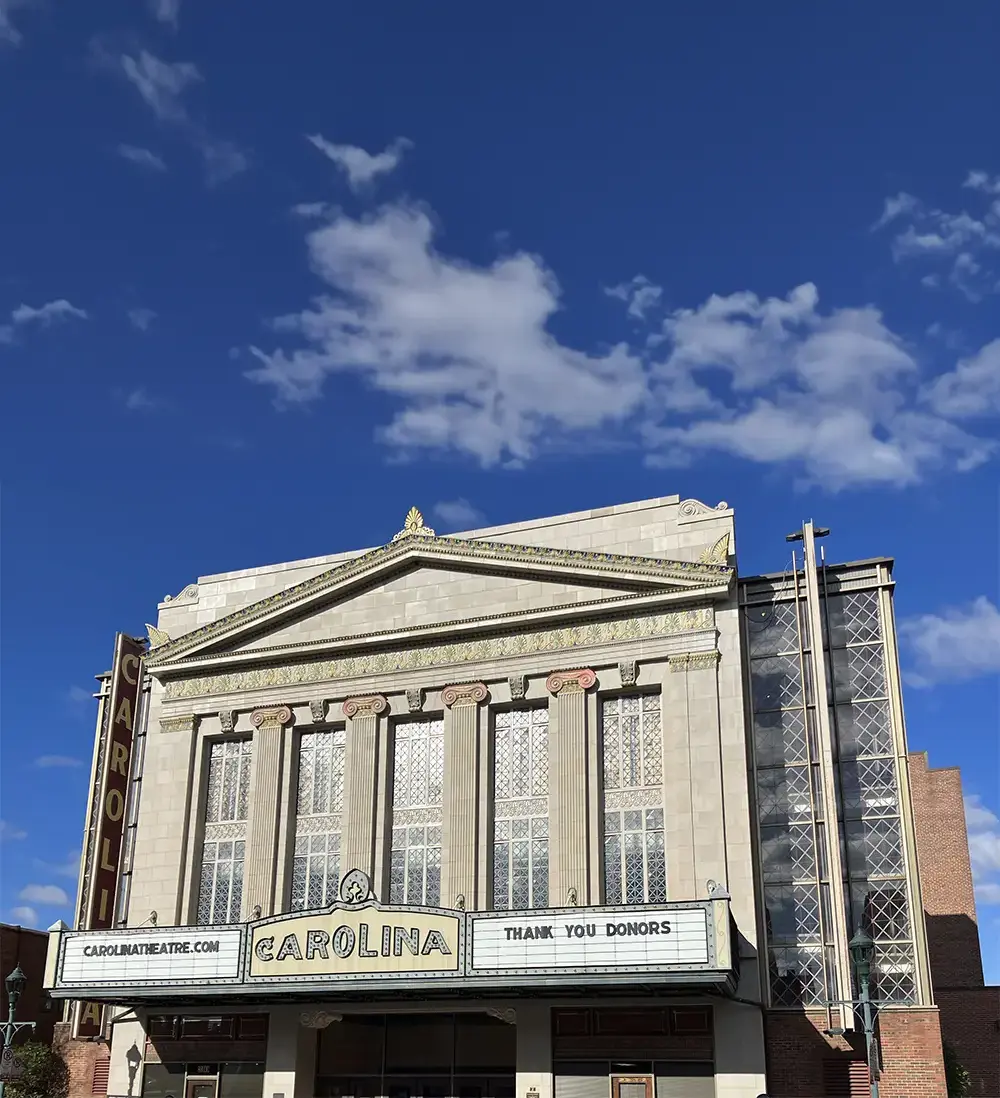
The exterior of the Carolina Theatre was designed in a Greek Revival Style, including Corinthian columns and gorgeous terracotta detailing painted in polychrome.
The interior of the Carolina Theatre was designed in an Italian Renaissance style, including an enormous bronze effect panel over the proscenium arch, flanked on either side with marble statues.
The Carolina Theatre’s Renaissance Room and Crown were originally intended to be the regional headquarters of the Publix-Saenger Theater Corporation, until the Depression dealt them a blow.
The ornately decorated proscenium arch features a mural by Herman Herschauer of five dancing maidens and beautiful scrollwork.
One of the great attractions of the Carolina Theatre when it opened was a $75,000 heating and electric refrigeration ventilation system, with which air was “replaced” every two minutes.
A night at the Carolina used to consist of live performing acts, the Carolina Theatre Orchestra, the Carolina News newsreel, an audience sing-along, and a silent film accompanied by the impressive Robert Morton theatre pipe organ. The organ still exists today.
In the 1950s and '60s, the Carolina Theatre was the home of the Saturday morning Circle K Club, a children’s radio program which met for a morning of music, funny people on stage such as the Old Rebel and Pecos Pete, cartoons, cliffhanger serials and Circle K Ice Cream bars from sponsor Guilford Dairy.
In 1943, soldiers from Camp Butner promoted the premier of “This is the Army” at the Carolina Theatre by invading Greensboro with jeeps and weapons and capturing City Hall.
In 1943, the “Dr. IQ Mental Banker Quiz Show” was broadcast from the Carolina Theatre by NBC, with $200 of silver pieces given for correct answers as the country listened to Greensboro.
When built, the Carolina was the only building in the country carrying out the original idea of Greek polychrome color except for the Philadelphia Art Museum.
The 1927, The Daily News said “the new Carolina Theatre here is considered the most beautifully designed show house in the entire south, and certainly one of the largest and most convenient in the country.”
When The Carolina Theatre opened there were three Vaudeville shows a day and “continuous pictures” shown from 2:00-11:00pm.
The use of color on the Carolina Theatre’s façade was uncommon in the 1920s, as most thought Greek temples were white, but – like The Carolina - they were painted with brilliant vibrant colors.
Even before the Carolina Theatre was built, the land was used for community enrichment, with both the circus and Chautauqua Educational Talks held on the grounds.
October 30th 1927, The Greensboro Daily News announced “Upon the Completion and Opening of The Carolina Theatre All Greensboro and Guilford County feels a justifiable pride in the opening of this fine new playhouse, and amusement palace destined to make Greensboro the amusement center of this section.”
The Carolina Theatre’s original Walker day-tone screen, which was automatically powered, was the largest Movie Screen in the state.
The Carolina Theatre celebrated their Seventh Anniversary with four straight days of Cecil B. DeMille’s “Cleopatra.”
October 30th 1927, The Greensboro Daily News described The Carolina Theatre as “a theatre in which we see evidence of Greensboro’s determination to assume a new position of prominence among the lovers of high class amusement.”
The poster art for the Carolina Theatre was designed by an in-house studio, up where the Crown is now housed, which was considered the finest studio in the Southeast.
From its opening and until suburban movie palaces were popularized in the late '50s, the Carolina Theatre was considered to be the finest theatre between Washington and Atlanta.
The Carolina Theatre had exclusive choice over which motion pictures were played in-house, a highly distinctive privilege for a theatre in the 1930s.
The Robert Morton pipe organ, which was originally used for silent films, went silent itself in 1948, and remained so for 12 years.
Rising 70 feet high, and 35 deep, the Carolina Theatre’s stage was one of the largest in the South when the theatre opened.
The Carolina Theatre opened in 1927 with the silent film “Painting the Town” starring Glenn Tryon and Patsy Ruth Miller.
William Sydney Porter, better known as the short story writer O. Henry, played as a boy on the ground where the Carolina Theatre now stands.
The Carolina Theatre was desegregated in May 1963. Before desegregation, African American patrons were ushered to the Carolina Theatre’s balcony level after entering a separate entrance at the south side of the building.
The Carolina Theatre’s seats were wooden until 1967 when they were replaced with rocking chair style seats.
In 1962, Sidney Hellier and members of the Greensboro Wurlitzer Organ Club restored the theatre’s Robert Morton Organ after spending 18 months fixing it. The pipe organ was used for the first time in over a decade for a free concert by Sidney Hellier, and then for a screening of the newly released film “The Music Man.”
In 1953, Carolina Theatre showed its first 3-D film, “Bwana Devil,” which was the first 3D film in English and the first in color. The Carolina Theatre’s manager at the time, Neill McGill, said that he believed all movies would soon be filmed in 3D.
The United Arts Council of Greensboro raised $560,000 to purchase and re-furbish the Carolina Theatre’s building from Jefferson Pilot Financial. The UAC (now ArtsGreensboro) refurbished the Carolina Theatre before reopening it as a community performing arts center in 1978.
In 1981, an intentionally set fire severely damaged The Carolina Theatre, with one fire-proof door preventing a fully destructive blaze.
The Carolina Theatre was added to the National Register of Historic Places in 1982.
The Carolina Theatre was threatened in the 1970s by downtown parking development, and narrowly escaped the wrecking ball, unlike the fate suffered by most other historic theatres in town.
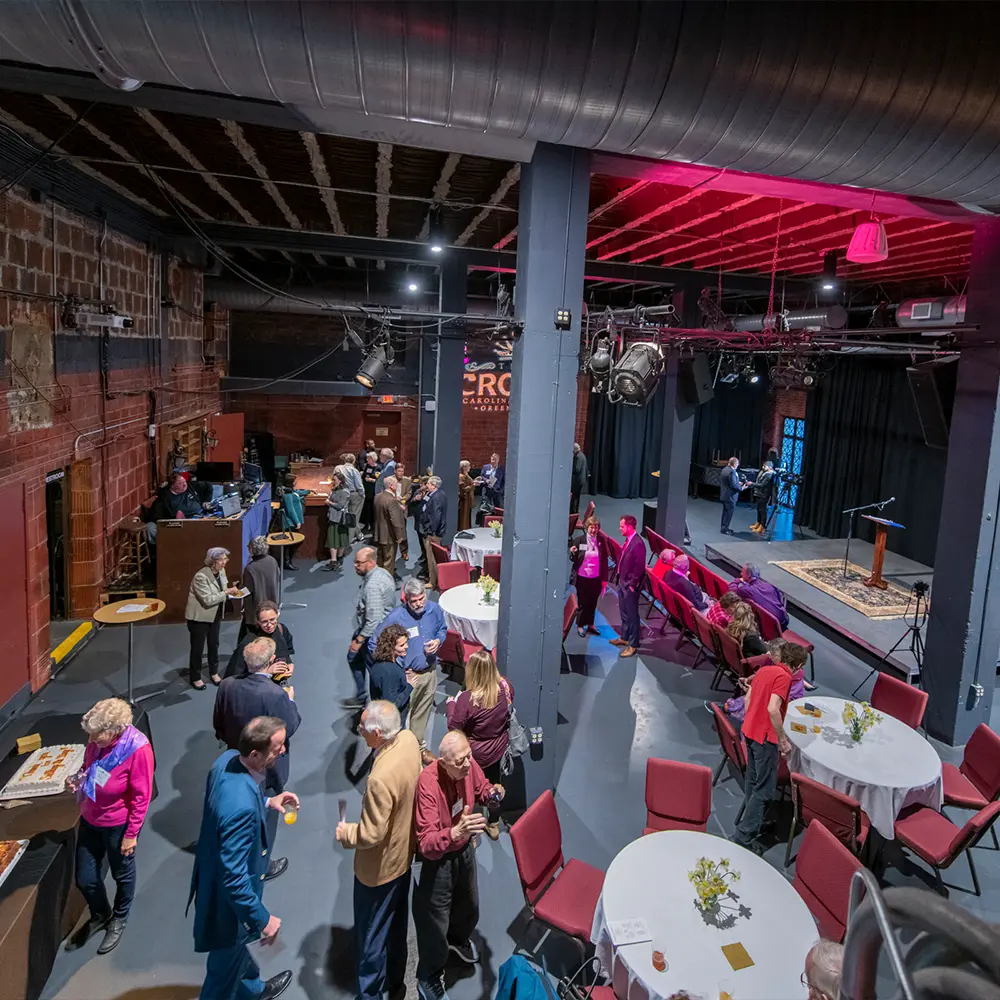
In 1987, the United Arts Council (now ArtsGreensboro) launched the Renaissance Campaign, a $5 million capital fundraising endeavor to renovate the Carolina Theatre, of which the theatre received $3.6 million. The Carolina Theatre re-opened in 1991 after major renovations, including the refinishing of a new space: The Renaissance Room, a banquet room overlooking the lobby.
While in disrepair in 1975, the Carolina Theatre was almost leased to an adult-film movie house, but the United Arts Council with major help from Ben Cone Sr., raised enough money in five days to save the building.
Today, the Carolina Theatre is one of five remaining nationally registered historic theatres in North Carolina and Greensboro’s only historic theatre.
In 2006, the United Arts Council (now ArtsGreensboro) passed ownership of the Carolina Theatre to the theatre itself, which now operates as a stand-alone non-profit organization. Since then, the Carolina Theatre’s mission has been “Presenting Arts, Preserving History.”
The Crown at the Carolina was given its name in 2013 after voting on suggestions given by theatre board members, staff, and from feedback on social media!
The “Film Junkie’s Guide to North Carolina” very appropriately features the Carolina Theatre on the cover.
A number of people claim that a ghost haunts the Carolina, moving the seats up and down. One former Carolina Theatre employee described the ghost: “One night I saw a woman standing above the balcony. She was a white figure with a blue outline.”
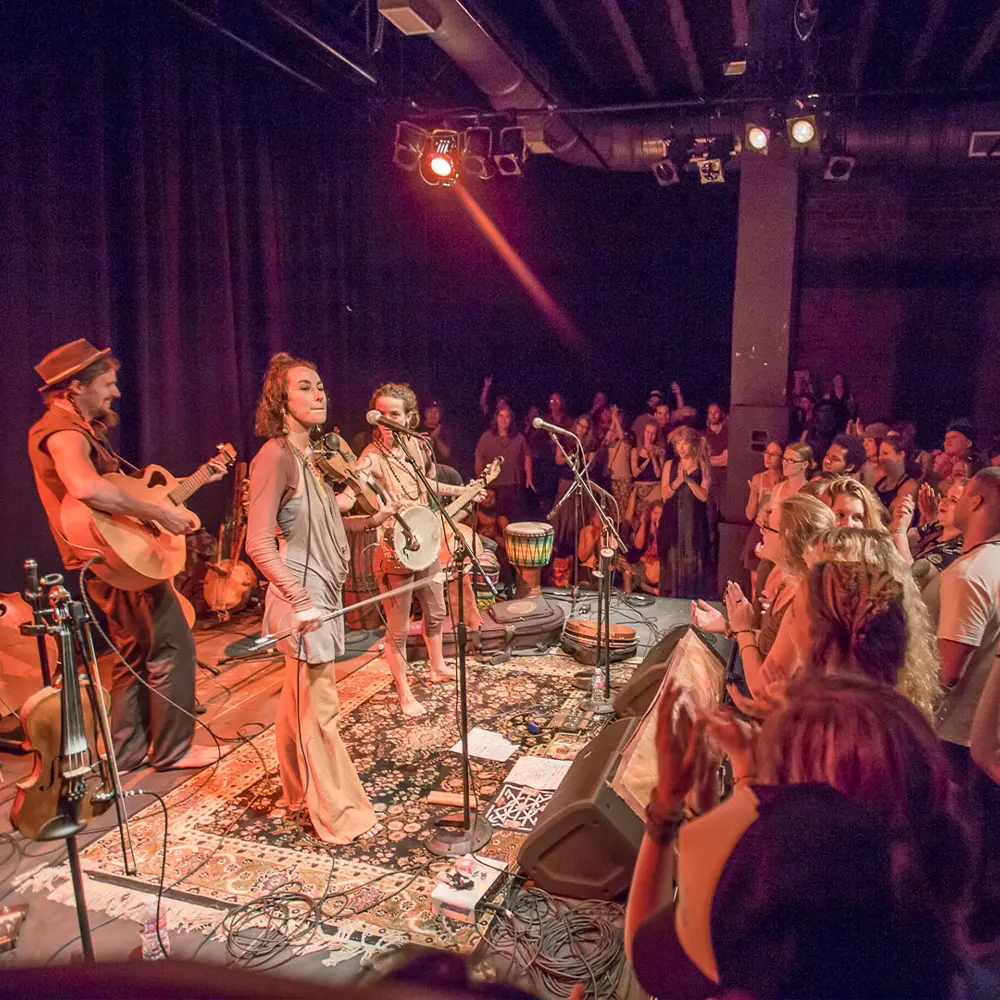
Since 1927, Amos and Andy, Vincent Price, Miles Davis, Judy Collins, Chet Atkins, Tony Bennett, Gordon Lightfoot, Ben Vereen, Emmy Lou Harris, The Chieftains, Doc Watson, Garrison Keillor, Allison Kraus and Union Station and Gregory Hines, and many, many more have appeared on the Carolina Theatre’s stage.